Showing posts with label treatments for tmj. Show all posts

Treatments for TMJ - Microcurrent Stimulation

Subjecting the muscles to microcurrents is one of the effective treatments for TMJ. It is not painful and the stimulation of the microcurrent will serve like a massage to the muscles.

You can have a look at the video below to have an idea on how this is done.


For a non invasive way to treat TMJ dysfunction, click here.
No comments

Treatments for TMJ - Support

Fitting of splint or mouth guards are one of the treatments for TMJ.

Watch the video below, to see how this is done.


For more TMJ treatment options, click here.

No comments

What is Temporomandibular Joint (TMJ) Syndrome?


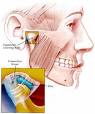
First off, the temporomandibular joint otherwise known as the jaw joint is the area where the lower jaw (mandibles) is connected to the upper jaw. This area have nerves, blood vessels and muscles and bones.

The muscle involved in opening and closing of the mouth is the same muscle that is involved in the closing and opening of the mouth. The jawbone has two movements: rotation or hinge action, which is opening and closing of the mouth, and gliding action, a movement that allows the mouth to open wider. This same mechanism of action also allows you to talk, yawn and chew.

That is why problems in this area can cause a variety of different problems due to interconnected nerves. The common symptoms of TMJ syndrome includes head and neck pain, facial pain, ear pain, headaches, a jaw that is locked in position or difficult to open, problems biting, and jaw clicking or popping sounds when you bite.

To determine the are of the the temporomandibular joint, you only need to place a finger infront of your ear. The portion where you can feel a bone protruding when you open your mouth is where your jaw joint is located.

Any condition that greatly affects this area and often characterized by the symptoms mentioned above is considered temporomandibular joint syndrome or more commonly known as TMJ Syndrome.

1 comments